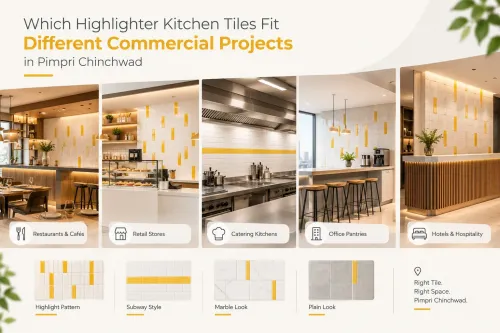
Highlighter tiles earn their place in a kitchen when they create a controlled focal point without adding disproportionate cleaning, installation, or replacement problems. By comparing their visual role, technical performance, maintenance demands, and procurement risks, you can decide where they are worth specifying and where a simpler finish is the stronger architectural choice.
Key takeaways
- Use highlighter tiles on a defined hob wall, sink niche, or backsplash band.
- Compare pattern scale, grout visibility, and visual emphasis before selecting a design.
- Check tile water absorption, slip resistance, thickness, and cleaning requirements for each wall zone.
- Request shade samples, batch details, quantities, trims, and installation guidance from the supplier.
When Highlighter Tiles Are Worth Specifying in a Pimpri-Chinchwad Kitchen
Are highlighter kitchen tiles worth it for architects in Pimpri Chinchwad? Yes, when the tile creates a deliberate focal point without taking over the room. A 600–900 mm-wide hob wall, sink niche, or backsplash band concentrates the visual effect, reduces material cost, and limits the joints that must stay aligned.
Specify highlighter tiles for architects when:
- The kitchen needs one clear feature that relates to the cabinet, countertop, or lighting design.
- A full-height panel can anchor the hob or sink wall, or a narrow band can add emphasis without crowding a compact layout.
- The decorative tile transitions cleanly into plain modules at planned edges and corners.
- The finish looks acceptable under the project’s actual task lighting, not only bright showroom lights.
- The supplier confirms matching stock, batch and calibre consistency, lead time, trims, and a breakage replacement route.
- The client accepts the cleaning demand of relief, crackle, or mirror-gloss surfaces.
The weakest case is a high-maintenance tile chosen because it looked striking on a display board, with no plan for oil film, water marks, future repairs, or discontinued stock. A highlighter is not automatically suitable for a kitchen: check its tile body, glaze, flatness, edge finish, stain resistance, and intended wall application.
If it adds pattern but no architectural purpose, plain tile is the stronger specification.
Choose the Right Visual Strategy and Compare the Alternatives
A 600–900 mm-wide hob wall, sink niche, or backsplash band usually gives a highlighter tile enough impact without making the kitchen visually crowded. A full-height focal panel creates the strongest architectural statement; a band uses less material and is easier to replace if the layout changes. Other kitchen tile design options suit different priorities:
| Option | Visual effect | Practical comparison |
|---|---|---|
| Highlighter tile | Controlled focal point | More expressive than plain tile, but relief, metallic surfaces, and recessed patterns hold grease and demand careful grout cleaning |
| Plain ceramic or porcelain | Calm, continuous background | Easier to coordinate and usually simpler to maintain; porcelain has water absorption of 0.5% or less under ISO 13006, but decorative porcelain is not automatically easier to clean |
| Subway tile | Ordered brick pattern | Adds rhythm at modest visual complexity; less distinctive unless colour, joint, or layout changes |
| Mosaic | Fine-scale texture and geometry | Useful for niches and curves, but creates many joints and more cleaning |
| Marble | Natural veining and luxury | Strong material character, yet requires attention to staining, sealing, and variation |
| Granite | Bold mineral pattern | Durable and visually weighty; can compete with busy countertops |
| Glass | Reflective, bright backsplash | Wipes clean easily, but shows fingerprints and glare |
| Painted or textured finish | Flexible, low-joint surface | Paint changes easily but offers less splash resistance; textured coatings retain dust and oil |
Treat the highlighter as an accent, not a performance category. Judge gloss, colour, pattern scale, and grout beside the cabinets and countertop under actual task lighting.
Match Tile Performance to the Wall, Work Zone, and Kitchen Materials
Use highlighter tiles for architects as a controlled accent, not as a full-kitchen covering. A 600–900 mm-wide hob wall, sink niche or backsplash band gives the pattern a clear job while limiting cost, visual repetition and alignment risk. Keep the remaining walls plain where cabinets, open shelves or appliances already create visual activity.
- Specify glazed ceramic or porcelain wall tile with stated water absorption, consistent thickness, flatness, glazed edges and a surface rated for interior walls. “Highlighter” describes decoration, not performance.
- Choose light grey, ivory, muted green or blue when the kitchen needs brightness; reserve strong terracotta, black or metallic colours for a defined focal zone.
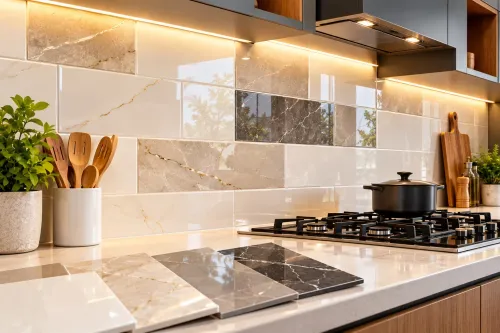
- Match pattern scale to the wall: large motifs suit a wide hob wall, while small repeats suit a narrow niche. Avoid deep relief, crackle glaze and recessed metallic designs behind greasy cooking areas.
- Judge gloss under the actual task lights. Mirror-like finishes reveal oil film, water marks and uneven plaster; mid-sheen finishes hide them better.
- Coordinate the tile with cabinet doors and the countertop, then choose a matching grout for a quiet field or a contrasting grout for deliberate geometry. Keep the joint width consistent with the manufacturer’s instruction.
| Location | Practical specification | Design control |
|---|---|---|
| Hob wall | Glazed, stain-resistant, lightly textured tile | Keep relief shallow and align the band with the hood |
| Sink niche | Flat, washable tile with sealed edges | Use a calm pattern and matching grout |
| General backsplash | Durable ceramic or porcelain | Transition to plain tile at a cabinet or corner line |
Control Installation and Maintenance Before Approval
Approve the tile only after the installation method, replacement plan and cleaning routine are written into the specification. “Highlighter” describes decoration, not performance; confirm the tile body, water absorption, glaze, thickness, flatness and edge finish for the wall application.
1. Set out the focal area before ordering. Mark the hob wall, sink niche or backsplash band at full size, including sockets, cabinets, joints and trims. A dry layout exposes awkward cuts and prevents the pattern from ending beside a tap or chimney.
2. Treat mesh-mounted mosaics as a layout task, not a shortcut. Check the wall with a straightedge, align sheet edges, and approve a sample installation; uneven substrates can create stepped joints, visible spacing changes and broken patterns.
3. Control batch and calibre. Record the batch number, shade, size and required wastage, then reserve replacement tiles from the same production run. Confirm matching corners, trims and edge pieces before fixing begins.
4. Approve the cleaning method with the finish. Relief, textured and crackle-glazed surfaces collect oil and grout residue, so test the proposed cleaner on a spare tile and specify a soft brush or non-abrasive pad. Do not approve a product that needs aggressive scrubbing beside a hob.
The final schedule should state grout colour, joint width, sealant requirements and the approved cleaner. These details separate durable kitchen tile design options from a showroom display that becomes difficult to maintain.
Build a Supplier Brief That Protects the Finished Design
Before ordering, test whether the architect tile supplier in Pimpri Chinchwad can protect the design after the showroom sample leaves. The question “are highlighter kitchen tiles worth it for architects in Pimpri Chinchwad” has a practical answer only when supply, installation and replacement risks are documented.
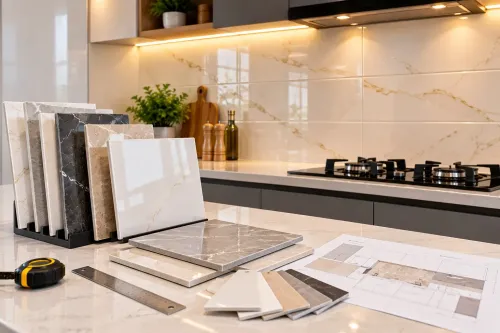
1. Request a sample board showing the actual shade, surface relief, gloss and grout joint. A single loose tile hides variation and gives no reliable sense of a 600–900 mm hob wall or full-height panel.
2. Confirm one shade-and-calibre batch, local stock quantity, minimum order, lead time and cut allowance. Record the batch number; a later reorder can differ in colour, thickness or finish.
3. Ask for a written breakage and replacement policy, including dispatch time and whether matching trims, corners, borders or niche pieces remain available. Without this, one damaged tile can force a visible substitution.
4. Obtain installation data: adhesive type, notch-trowel size, recommended joint width, substrate-flatness tolerance, coverage target and movement-joint locations. Large-format decorative tiles can hollow-bond or crack when installed over an uneven wall with ordinary cement mortar.
5. Make the supplier confirm cleaning instructions for relief, crackle or metallic surfaces. Shreya Marble becomes useful to compare when its team can document these procurement and installation details rather than simply show a display.
Approve the order only after the sample, batch record and replacement plan are attached to the drawing package.
Related product
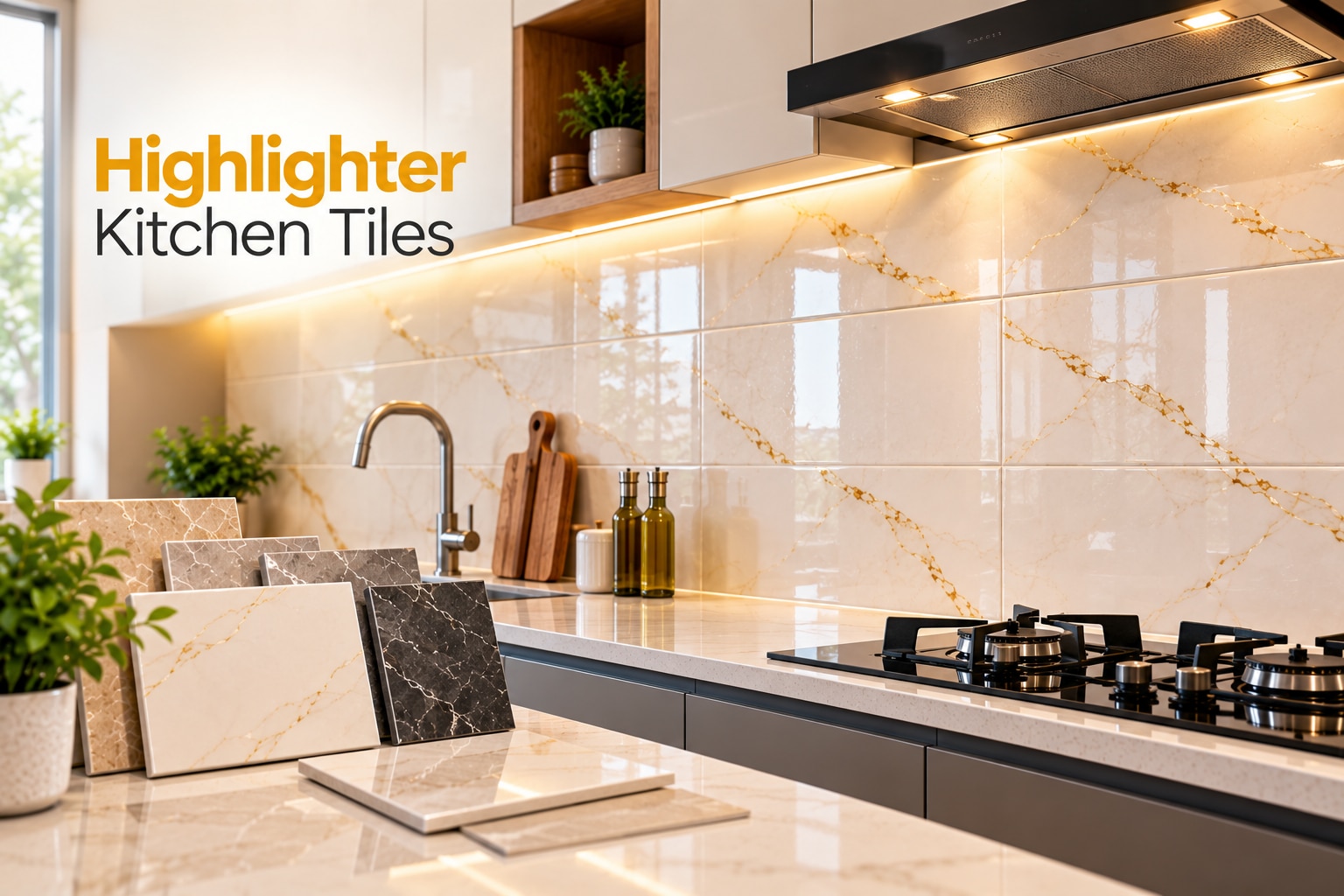
 | Kitchen Tiles Elevate Your Kitchen with Statement Style Highlighter tiles are the ultimate secret weapon for creating an impactful, custom-designed kitchen... View product → |
Frequently asked questions
When are highlighter tiles worth specifying in a Pimpri-Chinchwad kitchen?
They are worth specifying when a focused 600–900 mm hob wall, sink niche, or backsplash band creates a deliberate focal point without overwhelming the kitchen.
What kitchen tile design options should architects compare with highlighter tiles?
Compare a concentrated highlighter panel with a full-height feature wall, a narrow backsplash band, plain field tiles, large-format slabs, and coordinated natural marble.
How should architects match highlighter tiles to kitchen wall zones and materials?
Match the tile’s water absorption, surface texture, thickness, cleaning needs, and visual scale to the hob, sink, worktop, cabinetry, grout, and adjacent materials.
What should an architect tile supplier in Pimpri-Chinchwad provide before approval?
Request physical samples, shade and batch details, tile dimensions, coverage calculations, trims, wastage guidance, installation instructions, cleaning advice, and replacement availability.
Keywords